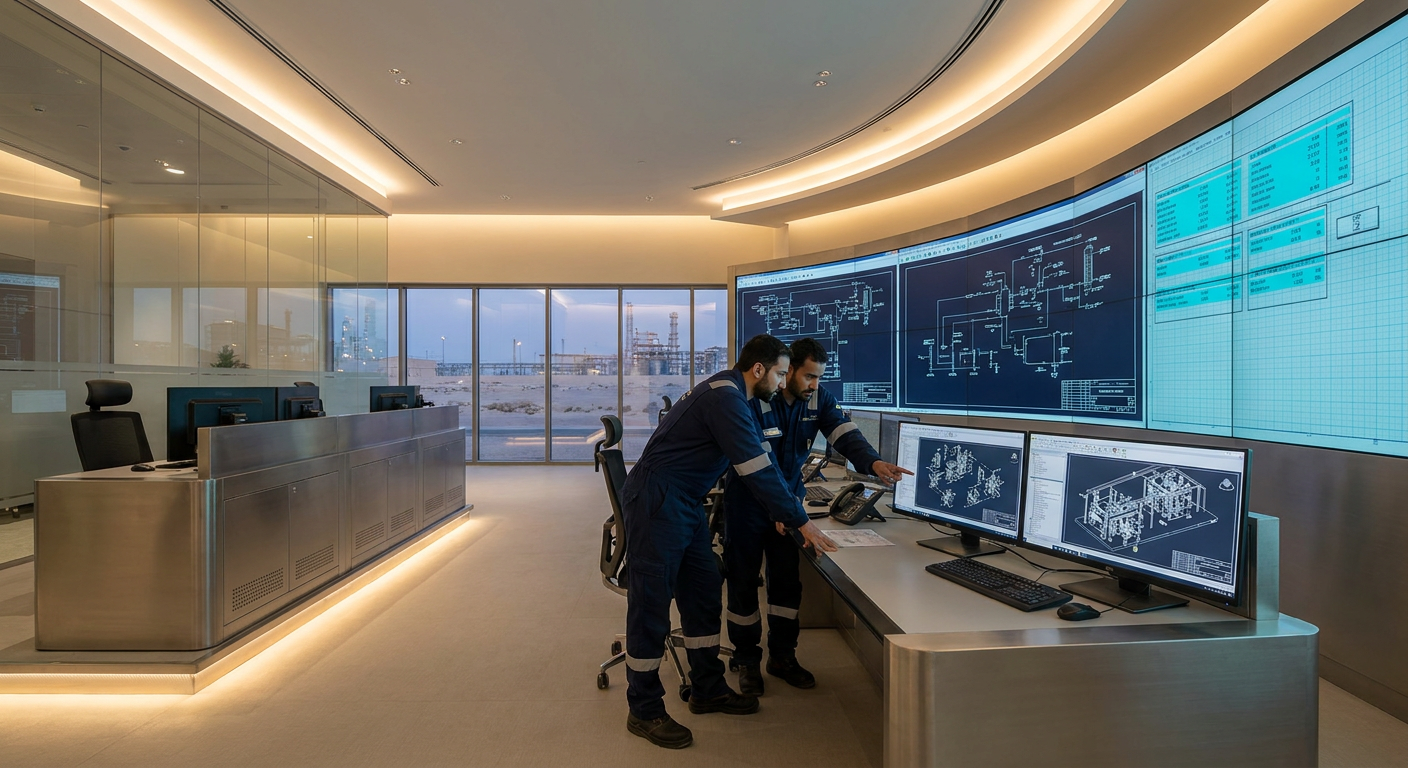
Saudi Arabia's Human Resources Development Fund (HRDF) committed 1 billion riyals ($266.6 million) to industrial training subsidies late last year, targeting more than 150,000 industrial jobs. That money is flowing into a sector under severe delivery pressure. Under the National Industrial Development and Logistics Program (NIDLP), the Kingdom aims to double its operating factory count and expand domestic manufacturing across chemicals, metals, renewables, and electronics. At the same time, localization quotas under Nitaqat require plant managers to fill junior and mid-level engineering seats with Saudi nationals within compressed hiring windows.
The venture market is taking notice. AILA recently closed a $3 million funding round to expand regional AI learning infrastructure, joining a broader wave of capital targeting technical and vocational edtech across the Gulf Cooperation Council (GCC). Market estimates now place the corporate training market in Saudi Arabia on track to exceed $17 billion by 2030, supported by SAR 1.2 billion in direct government vocational allocations.
For corporate learning and development (L&D) directors and plant engineering managers in Jubail, Yanbu, Riyadh, and Dubai, this capital influx highlights a long-standing operational problem. Legacy enterprise learning management systems (LMS) do not produce competent industrial engineers. Sending a fresh mechanical or electrical graduate through eighty hours of generic SCORM slides and compliance videos does not prepare them to troubleshoot a variable frequency drive, tune a PID control loop, or balance an industrial centrifugal pump.
As a result, industrial HR and technical training leads are dropping off-the-shelf catalog subscriptions. They are shifting budget into domain-specific adaptive training platforms that tie directly to shop-floor competencies, plant safety envelopes, and measurable time-to-autonomy.
The Failure Mode of the Enterprise Learning Catalog
For ten years, enterprise corporate training followed a standard playbook. HR procurement bought an all-you-can-eat enterprise license from LinkedIn Learning, Coursera for Business, or a legacy LMS like Cornerstone or SAP SuccessFactors. Success was measured by seat activation rates, video completion percentages, and annual compliance checkmarks.
In a software shop or a marketing department, that model sort of works. In a high-consequence industrial plant, it breaks down immediately.
First, general-purpose technical courses teach broad theoretical principles rather than local engineering execution. An off-the-shelf course on industrial automation might explain the history of programmable logic controllers (PLCs) or basic ladder logic syntax. It does not teach an instrumentation technician how to read a plant-specific piping and instrumentation diagram (P&ID), configure a safe shutdown margin on a Yokogawa or Emerson distributed control system (DCS), or inspect an ATEX-rated hazardous area enclosure according to regional civil defense standards.
Second, video catalogs provide zero signal on diagnostic competency. A junior engineer can let a 45-minute video on vibration analysis play in a background browser tab while answering emails, pass a five-question multiple-choice quiz with a 70% passing score, and receive a digital certificate. When that engineer is placed on call for a multi-stage compressor trip, they still lack the practical mental model needed to parse root causes under operational pressure.
Third, static learning paths waste the time of capable candidates. Engineering cohorts hired from local universities like KFUPM, King Saud University, or regional technical colleges arrive with wildly divergent preparation. One graduate may have spent two years in an undergraduate robotics lab with deep embedded C and wiring experience, while another has strong theoretical thermodynamics but has never held a digital multimeter. Putting both through the exact same eight-month linear onboarding sequence frustrates the advanced hire and overwhelms the beginner.
When localization targets mandate that 30% to 50% of plant engineering staff must be nationals, slow or ineffective onboarding translates directly into downtime risks, overtime costs for expatriate mentors, and elevated turnover during the first twelve months on the job.
The True Cost of Engineering Ramp Time
To understand why technical buyers are reallocating training budgets, you have to look at the financial math of engineering ramp time.
In a typical GCC petrochemical, power generation, or precision manufacturing facility, the fully burdened cost of a junior national engineer (salary, HRDF co-funding offsets, housing allowances, insurance, and equipment) runs between SAR 18,000 and SAR 30,000 per month.
If that engineer takes eighteen months of unstructured peer shadowing to become certified for independent shift work, the direct carrying cost of onboarding is roughly SAR 350,000 to SAR 540,000 before accounting for the time spent by the senior mentoring engineer.
A senior plant reliability engineer or lead electrical technician often earns SAR 45,000 to SAR 60,000 per month. If that senior engineer spends 25% of their working hours over twelve months answering basic questions, supervising routine check-sheets, and re-checking basic work orders, that mentorship overhead costs the operating company another SAR 150,000 in diverted engineering bandwidth.
| Onboarding Model | Average Time to Independent Plant Work | Mentorship Load on Senior Staff | First-Year Regretted Attrition | Typical Program Cost per Cohort (20 Engineers) |
|---|---|---|---|---|
| Legacy Generic LMS + Unstructured Shadowing | 14 to 18 months | High (20-30% of senior engineer time) | 22% to 35% | High indirect carrying costs (SAR 8M - 11M) |
| Rigid External Classroom (Offsite Bootcamps) | 10 to 12 months | Moderate (15% senior engineer time) | 15% to 20% | High direct vendor fees (SAR 600k tuition + travel) |
| Domain-Specific Adaptive Learning Engine | 5 to 7 months | Low (5-10% targeted coaching) | Under 10% | Software subscription + internal SME review hours |
The real operational hazard, however, is not just the carrying cost. It is the turnover rate. In competitive markets like the Eastern Province or Riyadh Industrial Cities, early-career engineers who spend twelve months doing administrative busywork because they are not yet certified for field operations often leave for another operator offering a 15% bump. The initial firm loses the onboarding investment entirely and resets the clock with a new hire.
Cutting ramp time from fourteen months down to six months saves between SAR 200,000 and SAR 400,000 per engineer in direct carrying costs, frees up senior technical capacity, and keeps junior engineers engaged in real work before they burn out.
How Adaptive Engines Change Technical Upskilling
Adaptive learning platforms replace static video curricula with dynamic knowledge-graph evaluation and continuous skill testing. In an engineering context, the engine operates on three specific layers: continuous baseline diagnostics, micro-remediation loops, and plant-specific competency frameworks.
[ Initial Diagnostics & Practical Assessment ]
                     │
                     ▼
[ Knowledge Graph Mapping (ISA / SMRP / Plant Specs) ]
                     │
         ┌───────────┴───────────┐
         ▼                       ▼
[ Targeted Deficit Modules ]   [ Fast-Track Advanced Labs ]
         │                       │
         └───────────┬───────────┘
                     ▼
[ Simulated Troubleshooting & Sandbox Execution ]
                     │
                     ▼
[ Verified On-Shift Competency Milestone ]
1. Dynamic Diagnostic Baselines
Instead of asking an engineer what they know, adaptive systems test what they can do through simulated troubleshooting and functional assessments.
When a new mechanical engineer joins a pipeline maintenance unit, the system evaluates their diagnostic method across fluid mechanics, valve calibration, and failure analysis through simulated scenarios. If the engineer demonstrates solid competence in pump performance curves but shows zero grasp of seal flush plans (API Plan 53B vs Plan 54), the system trims the fluid dynamics modules entirely. It routes the learner directly into the precise mechanical seal mechanics they lack.
This removes the boredom of sitting through weeks of redundant material that candidates already covered at university.
2. High-Frequency Retrieval and Micro-Remediation
Adult technical memory degrades rapidly without immediate practical reinforcement. Adaptive technical platforms serve small, targeted troubleshooting problems directly aligned to the engineer's daily work.
If an instrumentation hire is assigned to calibrate pressure transmitters on next week's turnaround schedule, the platform presents specific diagnostic logic problems around loop checks, HART communicator configurations, and zero-shift errors. Instead of long lectures, the engineer works through multi-step fault isolation exercises. If they miss a step, the platform pinpoints the exact theoretical misunderstanding (for example, miscalculating hydrostatic head pressure on a wet leg) and delivers a three-minute targeted remediation module before re-testing the application.
3. Alignment to Formal Industrial Standards
Unlike generic business courses, technical operations rely on formal international and internal engineering standards. Modern adaptive platforms can map their curriculum graphs to industry certifications such as:
- Society for Maintenance & Reliability Professionals (SMRP CMRP/CMRT)
- International Society of Automation (ISA CAP/CCST)
- American Petroleum Institute (API)
- Internal company engineering standards (such as Saudi Aramco Engineering Standards or SABIC Engineering Standards)
Platforms operating in this space, including specialized regional engines like n1Edtech.ai, construct their knowledge graphs around these operational taxonomies. When an L&D manager pulls a competency report, they do not see a generic "85% course completion" score. They see that an engineer is at 92% mastery of ISA-88 batch control standards and 41% mastery of industrial cybersecurity baseline controls (IEC 62443), with concrete data backing each metric.
Aligning Training Architecture with HRDF Subsidies
One practical driver behind this software transition is the evolving compliance structure of government workforce subsidies in Saudi Arabia.
HRDF has steadily moved away from unmonitored grants toward structured, milestone-based training-to-employment reimbursements. Under programs supporting industrial modernization, subsidies often link directly to demonstrated skill progression and long-term job retention.
For a corporate training director, this means traditional audit documentation (a sign-in sheet from a three-day hotel seminar or an export of LMS login timestamps) is losing its value during government funding reviews. HRDF auditors and corporate governance committees increasingly look for clear proof of capability:
- Objective pre-training and post-training competency assessments.
- Detailed time logs verifying deliberate practice in technical subject areas.
- Alignment with recognized national occupational classifications.
Adaptive platforms automate this compliance layer. Because every interaction in an adaptive knowledge graph is tracked at the competency level, training managers can export granular verification packages. These reports show exactly where an employee started, which specific industrial standards they mastered, how long each module took, and their practical validation scores.
This level of data protects the enterprise during subsidy audits and gives HR leaders clear metrics to defend their localized training budgets to the CFO.
The Procurement Checklist: Evaluating Adaptive Technical EdTech
If your organization is currently reviewing vendor proposals to overhaul its technical training stack, beware of marketing jargon. Many legacy LMS providers have simply added large language model wrappers to their legacy slide decks, calling them "AI-driven adaptive learning." That does not solve the engineering problem.
Here is how to separate real technical training engines from rebranded static catalogs:
1. Does the system assess diagnostic logic or just memory?
Ask the vendor to demonstrate an engineering assessment. If the questions are purely multiple-choice definitions ("What does PLC stand for?"), reject the platform. A real technical platform tests diagnostic strategy: it presents a fault symptom, offers realistic instrumentation data, and tracks whether the engineer chooses the correct sequential troubleshooting steps to identify the root cause.
2. How are custom plant assets and internal standards integrated?
Every plant has its own standard operating procedures (SOPs), safety rules, and equipment vendors. An effective engine should allow your senior subject matter experts (SMEs) to ingest internal engineering guidelines, P&IDs, and vendor manuals into the learning graph. If the vendor charges six months of professional services fees just to adjust a single learning module, the system will not keep up with your plant modifications.
3. Does the platform provide clean competency telemetry?
Look at the administrative reporting interface. You should be able to see an individual engineer's skill matrix mapped directly against job roles (e.g., Junior DCS Field Engineer, Level 2 Reliability Analyst). The dashboard should clearly highlight specific plant safety blind spots across the entire operational cohort.
4. What is the localized content availability?
While the international language of engineering is largely English, field technicians and junior operators across GCC sites often require bilingual instruction. The platform should support technical Arabic nomenclature alongside international standards without losing engineering precision.
Restructuring the 2025/2026 Technical Training Budget
Making this transition requires shifting funds from broad enterprise subscriptions into targeted technical platforms. Leading industrial firms across the GCC are rebalancing their training budgets along practical lines:
[ Traditional L&D Budget Allocation ]
- 50% Off-the-shelf LMS & generic content catalogs
- 35% External classroom seminars and travel costs
- 15% Ad-hoc on-the-job shadowing

[ Modern Adaptive Technical Training Allocation ]
- 40% Domain-specific adaptive learning infrastructure & simulations
- 25% Internal SME incentives & targeted on-site mentoring
- 20% Specialized hands-on lab / vendor equipment certifications
- 15% Baseline enterprise compliance & HR software
Notice the reallocation: spend on generic, one-size-fits-all digital catalogs drops significantly. That capital is redirected into adaptive technical platforms and practical equipment time. Part of the budget is also preserved to reward internal plant subject matter experts who build, review, and validate internal troubleshooting modules.
This financial rebalancing solves the persistent tension between HR and plant operations. Plant managers routinely complain that HR training programs pull junior engineers off the floor for weeks without teaching them how to do real work. Adaptive, job-embedded learning returns engineers to the floor faster, with documented competency that shop-floor superintendents can independently verify.
What Technical L&D Leads Should Do Next
If you are managing technical training, hiring cohorts under localization rules, or preparing an annual L&D budget for an industrial company in the region, start with a straightforward internal audit.
First, pick one operational discipline with high onboarding volume, such as junior instrumentation technicians, field mechanical engineers, or plant automation specialists. Calculate your true historical ramp time: the number of months between an engineer's start date and the day their shift supervisor signs off on their ability to perform independent maintenance work.
Second, calculate the direct carrying cost of that onboarding period using burdened salary figures, along with the estimated hours your senior engineers lose to informal supervision.
Third, run a pilot with an adaptive, domain-specific learning engine on your next incoming cohort of national engineers. Measure their baseline competence on day one, track their time to milestone completion against your historical baseline, and assess their retention after six months on shift.
The industrial mandates across Saudi Arabia and the wider GCC leave very little room for unproductive training programs. The operators that hit their localization and capacity milestones will not be the ones buying the largest video catalogs. They will be the ones treating technical competency as a precise, measurable engineering problem, using adaptive engines to turn new graduates into qualified field engineers in half the traditional time.
Sources
- https://newmarketpitch.com/blogs/news/edtech-funding-news
- https://www.arabnews.com/business/saudi-hr-fund-backs-over-150k-industrial-jobs-with-267m-training-push-2624631
- https://www.spa.gov.sa/en/N2298040
- https://www.einpresswire.com/article/691599272/saudi-arabia-corporate-training-market-booming-with-an-impressive-value-at-17-7-billion-forecast-2023-to-2030
- https://www.openpr.com/news/4389376/saudi-arabia-corporate-training-market-to-worth-usd-6-921-8
- https://www.pwc.com/m1/en/publications/documents/2024/elevating-education-with-emerging-technologies.pdf
- https://www.edtpartners.com/post/whats-new-in-edtech-part-i-mena-region