Frontend teams are currently testing how far natural language prompts can take a specification directly to Verilog. Prompting an LLM to generate an AXI4-Lite slave with ten control registers, interrupt clear-on-read behaviors, and write-enable masks feels impressive in an initial demo. The generated SystemVerilog compiles cleanly under Verilator. The top-level port list matches the prompt. The registers read and write as expected during basic sanity cycles.
Then the design hits integration.
In a multi-master SoC with 400 peripheral registers, shared interrupt lines, and distinct privilege rings, prompt-generated bus decoders fail in silent, expensive ways. An autoregressive token generator has no internal representation of address space topology, byte-lane strobe alignment, or atomic access semantics. It creates plausible SystemVerilog that compiles, simulates simple transactions, and hides dangerous corner cases like partial-word write corruptions, incomplete address decode wraps, and unsynchronized hardware read-side effects.
Industrial SoC design solved this problem twenty years ago by decoupling register data specification from target code generation. Standards like Accellera SystemRDL and IEEE 1685 (IP-XACT), executed through automation platforms such as Agnisys IDesignSpec or open-source PeakRDL compilers, treat register maps as executable golden metadata. Generative AI has real value in logic synthesis, test vector authoring, and state machine refactoring. But applying stochastic text generation to memory-mapped register decoders reverses two decades of design safety.
The Silent Failure Modes of Prompt-Generated Decoders
To understand why generative register mapping creates verification debt, look at what an address decoder actually implements. A memory-mapped bus slave is not just a case (paddr) block. It is a strict contract between hardware state, bus protocol timing, physical security policies, and software driver runtimes.
When an LLM writes an APB or AXI slave from a textual description, it typically constructs a monolithic combinational decode structure. Consider a basic 32-bit register with multiple access attributes: field A is read/write, field B is write-1-to-clear (W1C), field C is read-only hardware-updated, and field D triggers an internal FIFO pop on a read access (read-action).
+-------------------------------------------------------------------------+
| Address: 0x0024 (STATUS_CTRL_REG)                                       |
+-------------------+-----------------+-----------------+-----------------+
| Bits 31:16        | Bits 15:8       | Bits 7:1        | Bit 0           |
| RESERVED (RO, 0)  | FIFO_DATA (RC)  | ERR_FLAGS (W1C) | ENABLE (RW)     |
+-------------------+-----------------+-----------------+-----------------+
An LLM prompted to implement this register frequently commits four catastrophic errors:
Incomplete Address Decode and Aliasing: An LLM often masks upper address bits using a naive slice like
paddr[7:0]without checking that transactions targeting out-of-range offsets return a protocol error response (such asPSLVERRorDECERR). If software writes to an unmapped offset like0x00FC, the hardware wraps the decode and unintentionally modifies offset0x0004.Byte-Enable Ignorance: Standard buses allow 8-bit, 16-bit, and 32-bit accesses using write strobes (
PSTRBorWSTRB). LLMs almost universally write full 32-bit assignments likereg <= pwdata;whenpwrite && penableis true. If a device driver executes an 8-bit store to updateENABLEat bit 0, the unaligned upper byte strobes are ignored, and adjacent fields inside the same register are wiped with zeroes.Side-Effect Ordering on Speculative or Split Cycles: Read-clearing fields (RC) or FIFO-pop-on-read fields must execute their side effects precisely when the bus transfer completes successfully. If an LLM samples
penable && !pwrite && (paddr == OFFSET)without qualifying the bus ready signal (pready), a wait-state or speculative read trigger causes data loss before the master actually latches the bus value.Hardware Write Collisions: When software writes to clear an interrupt flag (W1C) on the exact clock cycle that hardware asserts a new interrupt condition, the hardware event must win. LLMs frequently assign priority to the bus interface, causing real hardware fault events to be silently dropped.
These bugs do not fail simple directed tests. If your testbench only performs 32-bit aligned reads and writes with zero wait states, prompt-generated RTL passes 100 percent of transactions. The flaw only surfaces when bare-metal drivers run unaligned accesses or during stress testing under bus contention.
Deterministic Specification vs Generative Synthesis
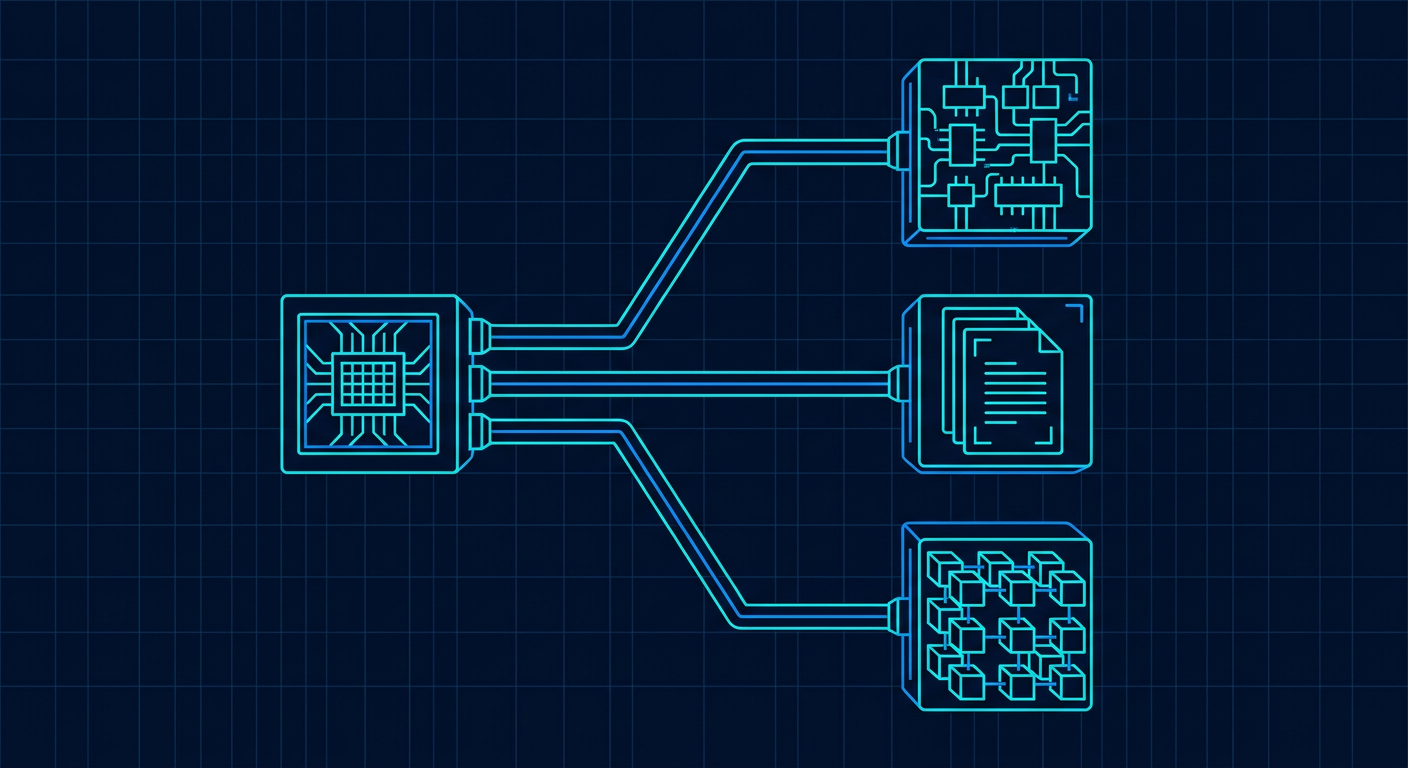
The fundamental divide between SystemRDL automation and LLM generation is the distinction between a formal data structure and a statistical text sequence.
+-----------------------------------------------------------------------------+
| Golden Specification Layer (Single Source of Truth)                        |
| - Accellera SystemRDL 2.0 / IP-XACT XML / Agnisys IDesignSpec Metadata      |
+-----------------------------------------------------------------------------+
                                      | (Deterministic Compilers: IDS / PeakRDL)
     +--------------------------------+--------------------------------+
     |                                |                                |
     v                                v                                v
+-----------------------+  +-----------------------+  +-----------------------+
| Synthesizable RTL     |  | Verification (UVM)    |  | Software Ecosystem    |
| - Strict AXI/APB/AHB  |  | - Complete uvm_reg_blk|  | - C/C++ Header Files  |
| - Full Byte Strobes   |  | - Auto Built-in Tests |  | - Linux Device Trees  |
| - Safe Reset/CDC      |  | - Coverage Models     |  | - Register Docs (PDF) |
+-----------------------+  +-----------------------+  +-----------------------+
In deterministic automation, the engineer writes a SystemRDL file or defines properties in a schema-backed platform. The tool treats this definition as an abstract syntax tree. It processes structural properties like reset values, bit widths, write masks, software access permissions (sw = rw, sw = w1c, sw = r), and hardware access permissions (hw = w, hw = na).
When you compile SystemRDL, the tooling generates five downstream deliverables simultaneously from one source:
- Synthesizable, lint-clean Verilog or VHDL register blocks.
- A complete UVM Register Abstraction Layer model (
uvm_reg_block). - C/C++ driver header files with structure definitions and bitfield shift macros.
- Formal property verification suites checking access policies across all address spaces.
- Markdown, HTML, or PDF hardware register documentation.
If an architect changes an offset from 0x0040 to 0x0080 in SystemRDL, running the generator updates the RTL decoder, shifts the UVM address maps, rewrites the C header files, and synchronizes the documentation.
In an LLM-driven workflow, changing an address requires reprompting the model to update the RTL, writing a separate prompt to update the UVM testbench, and writing a third prompt for the software headers. The model can introduce an off-by-four error in the UVM model while getting the RTL right, or flip an endianness macro in the C header. You lose the single source of truth.
Comparing Real Verification Overhead
To measure the engineering cost of prompt-based register logic versus deterministic automation, we evaluate how both approaches hold up against production verification standards.
Illustrative Implementation Comparison
The following composite breakdown contrasts an industrial SystemRDL compiler flow against a frontier LLM prompt workflow for a medium-scale SoC subsystem (128 registers across 4 independent bus domains, including W1C, clear-on-read, read-only shadow registers, and multi-word 64-bit counters).
| Verification Metric | SystemRDL Automation Flow | Generative Prompt Flow (Direct Verilog) |
| :--- | :--- | :--- | :--- |
| Address Decode Correctness | 100% formal mathematical guarantee; zero aliasing escapes | High risk of aliasing on unmapped addresses; manual decode checks needed |
| Byte Strobe Compliance | Fully implemented (WSTRB/PSTRB per field slice) | Frequently omitted or incorrectly grouped into full-word writes |
| Hardware/Software Collisions | Deterministic arbitration rule enforced by tool compiler | Hallucinated precedence logic; requires custom formal assertions |
| UVM RAL Generation | Full uvm_reg classes, field masks, and auto-generated sequences | Manual or separate prompt generation; prone to RAL-vs-RTL field mismatch |
| Spec Update Turnaround | Under 10 seconds (deterministic batch recompile) | Hours of cross-prompting, manual manual alignment, and trace debugging |
| CDC for Asynchronous Fields | Synchronizer cells instantiated deterministically | Prone to naive flop chains or missing sync attributes across clock domains |
When an LLM writes RTL, verification engineers cannot trust the generated decoders. They must spend days writing directed UVM sequences to verify basic access permissions: reading read-only registers, writing write-only registers, verifying that W1C clears only target bits, and asserting that reserved address spaces return standard protocol bus errors.
With deterministic platforms like Agnisys or PeakRDL, these tests are standard and automated. The UVM standard provides built-in sequences (uvm_reg_hw_reset_seq, uvm_reg_bit_bash_seq, uvm_reg_access_seq). Because the UVM RAL model and the RTL are compiled from the exact same SystemRDL source, running the standard register check sequence instantly proves conformance without handwritten test logic.
Where LLMs Actually Add Value in Bus Infrastructure
Saying LLMs should not generate register maps does not mean AI has no place in frontend bus and peripheral development. The correct architecture uses deterministic tools for structured schema and uses LLMs for non-standard algorithmic logic, protocol adaptation, and bridge logic.
+-----------------------------------------------------------------------------+
| HYBRID DESIGN ARCHITECTURE                                                  |
+-----------------------------------------------------------------------------+
| 1. DETERMINISTIC LAYER (Schema & Interconnect Ground Truth)                 |
|    - Accellera SystemRDL / IP-XACT Metadata                                 |
|    - Agnisys IDS / PeakRDL Register Compilers                               |
|    - Outputs: Memory-Mapped Slaves, UVM Reg Blocks, C Headers               |
+-----------------------------------------------------------------------------+
                                      |
                                      v (Decoded Internal Bus / Control Wires)
+-----------------------------------------------------------------------------+
| 2. GENERATIVE AI LAYER (Targeted State Machines & Datapaths)                |
|    - Prompt-Synthesized Packet Encoders/Decoders                            |
|    - Custom Protocol Bridging (e.g., SPI-to-Internal Fifo State Machine)    |
|    - Algorithmic Compute Cores (Filtering, CRC, Crypto Accelerators)       |
|    - Bounded by Formal Properties and SystemVerilog Assertions (SVA)        |
+-----------------------------------------------------------------------------+
There are three areas where generative models deliver strong results without compromising structural safety:
1. Translating Unstructured Datasheets into SystemRDL
Many legacy IP blocks, third-party sensor datasheets, and peripheral specifications exist solely as unstructured PDF tables or Word documents. Manually keying 200 register descriptions into SystemRDL or IP-XACT is slow, repetitive, and vulnerable to human typist errors.
LLMs excel at extracting tabular data from PDF text or HTML documentation and emitting syntactically valid SystemRDL code. In this role, the LLM is not generating RTL. It is accelerating data entry into a strongly typed, deterministic compiler. If the LLM makes an error in field width or offset, the SystemRDL compiler catches overlapping offsets or out-of-range bitfields at compile time.
2. Synthesizing Complex Internal Datapaths Behind the Registers
Once the deterministic register block exposes clean parallel wires (enable_reg_out, threshold_val[15:0], status_err_in), an LLM can write the algorithmic control logic behind those wires. Prompting an LLM to generate an I2C master controller, a packet parsing state machine, or a programmable PWM generator that attaches to register control signals works reliably when constrained by standard SystemVerilog assertions.
3. Authoring Custom Functional Coverage Groups
While standard UVM register access sequences are auto-generated from SystemRDL, functional coverage across cross-register interactions is not. If register A must not be modified while register B is in a specific mode, an LLM can inspect the SystemRDL file and generate targeted covergroup and coverpoint constructs to monitor these cross-register dependencies during dynamic simulation.
A Production-Grade Decision Framework
If you are setting up an RTL development flow for an ASIC or complex FPGA project, use this decision framework to divide responsibilities between deterministic tools and generative prompts.
                           [Design Task Required]
                                     |
                  Is it an address map, register interface,
                        or bus decode structure?
                                   /   \
                                 YES    NO
                                 /       \
                                /         v
                               /   Is it an algorithmic datapath,
                              /   FSM, or custom verification test?
                             /            /   \
                            /           YES    NO
                           /            /       \
                          v            v         v
             [Use Deterministic] [Use LLM Generation] [Standard Static Code]
             - SystemRDL 2.0     - Bound with SVAs    - Vendor Primitive IP
             - IP-XACT Schema    - Formal Equivalence - Standard Library
             - Agnisys / PeakRDL - Cocotb / Verilator
Architectural Ground Rules
- Zero Raw Prompts for Bus Decoders: Never permit engineers to write raw AXI, AHB, or APB register decoders using LLM prompts. All register logic must originate from a formal specification language (SystemRDL or IP-XACT).
- Run Compiler-Driven Lint and Formal Checks: Use deterministic generators to output synthesizable SystemVerilog. Run commercial linters (SpyGlass, AscentLint) or open-source Verilator lint checks against the output to confirm strict parameter conformance.
- Isolate AI-Synthesized Blocks: If you use generative AI to author state machines or datapaths, wire them to the register block through standard FIFO or valid/ready streaming interfaces. Never let prompt-generated modules directly tap into multi-master bus arbitration lines.
- Automate the UVM RAL Flow: Never allow manual or generative authoring of
uvm_regclasses. If the register map changes, regenerate the RAL directly from the SystemRDL source in your continuous integration pipeline.
What This Means for Silicode
Silicode treats hardware generation as a verifiable engineering system, not a statistical parlor trick. Real silicon cannot tolerate hallucinated address maps, unhandled byte strobes, or unverified bus arbitration.
By embedding strict deterministic standards like SystemRDL and IP-XACT into the core workflow, Silicode establishes an absolute ground truth for all register and bus topologies. Generative AI is deployed where it delivers verified value: optimizing data path pipelines, generating targeted assertion suites, and accelerating complex state machine implementation. Every line of Verilog that touches a bus interface is mathematically constrained, fully linted, and provably correct before it ever approaches a simulation harness or synthesis pipeline.
What to Watch Next
As you evaluate new EDA tooling and automated RTL flows, monitor how tools handle specification handoffs. Watch for tools adopting open language servers for SystemRDL and automated translation from natural-language system requirements directly into valid Accellera schemas rather than unconstrained SystemVerilog text.
Audit your existing peripheral modules today. Run a fault-injection script against your APB and AXI-Lite slaves to verify that every unmapped address offset asserts a protocol error and that every multi-byte register correctly respects active-low byte strobe masks. If your decoders are hand-written or prompt-generated without these checks, you have silent architectural bugs waiting for software integration.
Direct Q&A: Deterministic Automation vs Generative RTL
Why can't frontier LLMs safely generate AXI/APB register decoders directly?
LLMs lack a mathematical model of address space geometry, concurrency, and bus protocol state machines. They reliably omit byte-lane strobe handling, fail to handle speculative read side-effects, and leave unmapped address spaces vulnerable to bus aliasing.
How does SystemRDL eliminate register verification bugs?
SystemRDL acts as a formal, single source of truth. A deterministic compiler generates synthesizable RTL, UVM register models, C/C++ driver headers, and documentation simultaneously. Any change to an offset or bitfield instantly propagates across hardware, verification, and software stacks with mathematical consistency.
Where does generative AI belong in SoC frontend design?
Generative AI should be applied to unstructured-to-structured translation (such as converting PDF register tables into SystemRDL), generating algorithmic data path logic behind clean register interfaces, and writing complex functional coverage assertions.
Sources
- Agnisys FPGA Development Solutions: https://www.agnisys.com/solutions/fpga-development/
- Agnisys Core EDA Solutions: https://www.agnisys.com/
- Accellera SystemRDL Standard: https://www.accellera.org/downloads/standards/systemrdl
- SystemRDL Open Source Organization: https://github.com/systemrdl
- PeakRDL Documentation: https://peakrdl.readthedocs.io/en/latest/systemrdl-tutorial.html
- Accellera SystemRDL Architecture Overview: https://en.wikipedia.org/wiki/SystemRDL