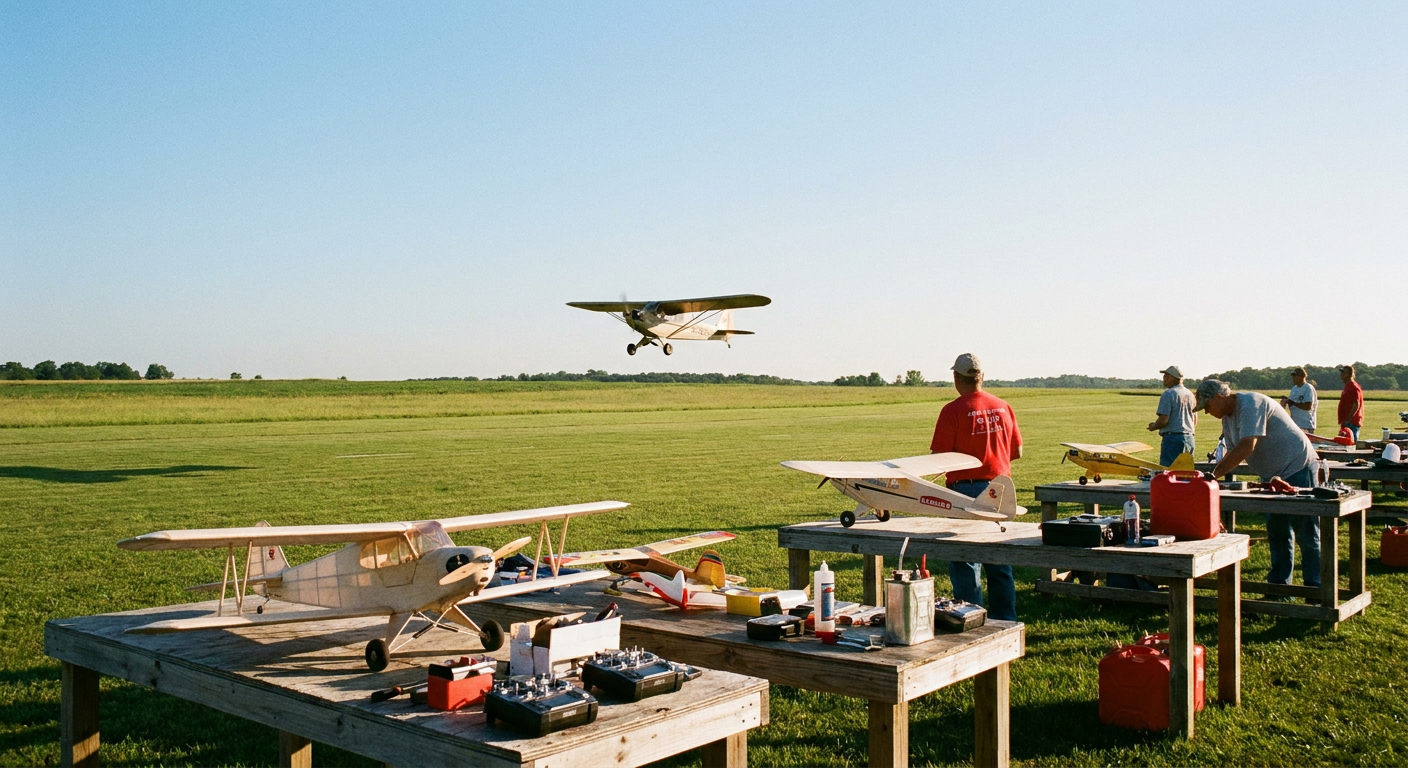
Talk at the club pits over the last couple of weeks has been unusually loud, and for once nobody was arguing about whether Castle ESCs run cooler than Hobbywing. The buzz came from the FAA proposed right-of-way changes tucked inside the long-awaited Part 108 draft for commercial beyond-visual-line-of-sight operations. Word spread fast across Facebook pilot groups and RC forums that the FAA was getting ready to flip decades of aviation tradition on its head by giving unmanned aircraft the right of way over manned airplanes when flying below 400 feet above ground level.
Within hours, flyers were debating what this meant for local grass strips. If a low-flying Piper Cub cuts over your runway on a Saturday morning, who yields to whom? If you are trimming out a 60-inch balsa warbird or hovering a 3D foamie at 200 feet, does a crop duster or a backcountry bush plane have to steer clear of you now?
The short answer is no. If you pull up your transmitter and fly recreational models, nothing about your obligation to clear the airspace has changed. But the proposal, along with the pushback from general aviation groups like AOPA, reveals a lot about how low-altitude airspace is changing. It also highlights exactly what your club needs to do to keep your flying site safe, compliant, and open.
What the FAA Part 108 Proposal Actually Proposes
To understand where the confusion started, you have to look at what the FAA is trying to solve. Under the traditional rules in 14 CFR 91.113, manned aircraft have always followed a strict hierarchy: unpowered gliders and balloons yield to almost nothing, airships yield to gliders, and powered airplanes yield to everyone else. When drones entered the picture under Part 107 and recreational rules, the FAA added a simple, blanket mandate: unmanned aircraft must always yield right of way to all manned aircraft, period.
That simple rule worked well when drones were either hobbyists flying line-of-sight over open parks or Part 107 photographers capturing real estate photos. But commercial package delivery companies and industrial survey operators want to fly autonomous routes across hundreds of miles without a human pilot watching the aircraft with their own eyes.
In the proposed Part 108 rulemaking, the FAA suggested a split standard for low-altitude airspace. Below 400 feet AGL, outside of airport approach corridors, the proposal would require manned aircraft to yield right of way to commercial unmanned aircraft that meet specific equipage and detect-and-avoid standards. The reasoning from regulators was practical: manned pilots operating below 500 feet in cruise are relatively rare outside of takeoffs, landings, agricultural spraying, and specialized low-level operations. A small commercial drone cruising at 350 feet on an automated grid cannot always see a fast-moving general aviation aircraft with visual sensors in time to dodge an erratic pass, while manned aircraft flying in low airspace could theoretically be trained to watch for drone corridors.
General aviation pilots and organizations like AOPA pushed back immediately. A pilot in a Cessna 172 or an agricultural spray plane cannot easily spot a three-foot drone against ground clutter at 120 knots. Expecting a human in a cockpit to see and avoid a small drone at low altitude is unrealistic. More importantly, the proposal created massive confusion among recreational flyers who wondered if this applied to their local flying site.
The Rule for Weekend Modelers Has Not Changed
Here is the critical distinction that every club member needs to know: the proposed right-of-way change applies exclusively to certified commercial operations operating under the upcoming Part 108 framework with approved automated systems. It does not apply to recreational flyers operating under the statutory exception for recreational aircraft (often referred to as Section 44809 or Part 107 hobby flights).
If you are flying a 2-meter balsa glider, an electric EDF jet, or a 4S foam park flyer, your legal duty remains exactly what it has always been:
- You must give way to all manned aircraft, without exception.
- You must yield the right of way immediately upon seeing or hearing full-scale traffic.
- You cannot force a manned aircraft to alter its flight path or altitude.
Even if Part 108 passes in its proposed form, a model airplane at an AMA club field or an open field does not gain right of way over a general aviation airplane. If a low-wing Mooney or a local helicopter comes buzzing through the valley at 300 feet, you are still required by federal rule and community safety guidelines to drop altitude, steer clear, and land if necessary.
Physics decides right of way faster than the FAA anyway. A four-pound foam airplane hitting the windshield or wing spar of a 2,500-pound Cessna will cause catastrophic damage to the full-scale plane and completely destroy your model. In any real-world encounter at the field, the model yields every single time.
Why Low Full-Scale Traffic Happens Near Flying Sites
Many newer flyers assume that manned aircraft are never allowed to fly below 500 feet, so any plane near their model must be breaking the law. That is a dangerous misunderstanding of basic aviation rules.
Under 14 CFR 91.119, pilots must maintain at least 1,000 feet above the highest obstacle in congested areas, and 500 feet above people, vehicles, and structures in non-congested areas. But over open water or sparsely populated rural areas (where most RC fields are located), a full-scale pilot can legally fly as low as they want, provided they stay at least 500 feet away from any person, vessel, vehicle, or structure.
In farming country, agricultural aircraft (crop dusters) operate right down at tree-top level and frequently make wide, low turns over adjacent open pastures. Backcountry bush pilots practice off-field spot landings on private farm strips. Emergency medical helicopters routinely transit low across rural flight paths to avoid weather or follow river beds. If your club field is situated in a rural patch between farm fields, low-altitude manned traffic is not just possible, it is guaranteed.
+-----------------------------------------------------------------------------------+
|                         AIRSPACE RIGHT OF WAY AT A GLANCE                         |
+------------------------------------+----------------------------------------------+
| Flight Category                    | Right of Way Rule Below 400ft AGL            |
+------------------------------------+----------------------------------------------+
| Recreational RC (Section 44809)    | Must yield to ALL manned aircraft always.    |
| Part 107 Commercial Drone          | Must yield to ALL manned aircraft always.    |
| Proposed Part 108 (BVLOS only)     | Proposed right of way over manned traffic.   |
| Full-Scale General Aviation        | Right of way over recreational model planes. |
+------------------------------------+----------------------------------------------+
What This Means for Unregistered and Non-FRIA Fields
If your club flies at an FAA-Recognized Identification Area (FRIA), your field coordinates are on the sectional charts and airspace maps used by aviators. Full-scale pilots using modern electronic flight bags like ForeFlight can see the charted boundary of your flying field and know that unmanned models operate there regularly.
However, thousands of modelers fly at non-FRIA fields: private farm strips, leased dairy pastures, and public park clearings. If you are flying at an unchartered grass strip, full-scale pilots have zero visual or digital warning that your aircraft are in the air.
At these unregistered fields, see-and-avoid is entirely on the shoulders of the RC pilot. When you are flying a fast, 100 mph sport model or an FPV wing through goggles, your field of view is narrow. You cannot rely on your peripheral vision to spot a low-flying Piper Cub approaching from behind the tree line.
This is where informal flying groups run into trouble. An unorganized group of flyers with no established safety protocol can easily miss the sound of an approaching aircraft over the noise of several two-stroke nitro engines or high-pitch EDF fans screaming on the flight line.
Practical Steps Your Flying Club Should Take Right Now
Keeping your grass strip safe and preventing close calls with local air traffic does not require expensive technology or heavy administrative overhead. It comes down to basic flight-line discipline that every experienced club has used for decades, updated for today's busier airspace.
1. Enforce the Dedicated Spotter Rule
When multiple pilots are flying, or whenever an FPV pilot is wearing goggles, a spotter is not an optional luxury. It is a vital safety layer. The spotter stands at the flight station with their head up, scanning the horizon rather than watching the model do aerobatic loops. Their only job is listening and looking for full-scale traffic.
2. Standardize Clear Flight-Line Callouts
Every club needs standard emergency callouts that everyone understands instantly. When anyone hears or sees a full-scale plane, they shout:
"Air traffic low, inbound from the south!"
Upon hearing that call, all pilots on the line must immediately:
- Stop high-altitude aerobatics and bring their models down below tree-top level (under 100 feet AGL).
- Circle over the runway safety zone away from the approach path.
- Prepare to land if the full-scale aircraft is tracking directly over the field.
Nobody argues about who had right of way. You drop altitude first and talk about it in the pits afterward.
3. Reach Out to Your Local Municipal Airport and Ag Sprayers
If your field is within five to ten miles of a small uncontrolled airport (Class G airspace), pick up the phone and talk to the airport manager or local flight schools. Let them know where your grass strip is located and your typical weekend flying hours. Most flight instructors and ag operators appreciate knowing where model clubs operate so they can add a mental note to avoid low training passes over your patch of grass.
4. Consider a Low-Cost Pit ADS-B Receiver
Several tech-forward clubs have started adding ground-based ADS-B monitors to their frequency boards or shade shelters. You do not need expensive avionics for this. A simple Raspberry Pi connected to an inexpensive RTL-SDR USB dongle (around $35 to $40) running FlightAware PiAware or ADS-B Receiver software can feed local aircraft positions to a cheap tablet or an audio buzzer in the pits.
When a transponder-equipped aircraft descends below 1,000 feet within two miles of the field, the tablet sounds an audible chime. While it will not catch an old non-electric J-3 Cub with no battery, it reliably warns your flight line when medical helicopters or transient GA planes are dropping into your valley.
+-----------------------------------------------------------------------------------+
|                         CLUB FIELD SAFETY CHECKLIST                               |
+-----------------------------------------------------------------------------------+
| [ ] Visual Observer assigned for all FPV and high-speed flights                   |
| [ ] Standardized callout ("Air Traffic Low") practiced by all members             |
| [ ] Immediate descent protocol below 100ft AGL when traffic is heard              |
| [ ] Flight area boundaries posted clearly at pit entrances                        |
| [ ] Local crop-duster and general aviation base notified of field location        |
+-----------------------------------------------------------------------------------+
Common Misconceptions Heard Around the Pit Tables
Whenever the FAA publishes new proposals, club pits fill up with bad legal advice. Here are three common myths you should correct if you hear them at your field.
Myth 1: "If I stay under 400 feet, full-scale planes are illegal and at fault." False. As noted under 14 CFR 91.119, full-scale pilots can legally fly low over rural, sparsely populated areas as long as they stay 500 feet away from people and buildings. Even if a full-scale pilot violates an altitude rule, Section 44809 still legally requires the model aircraft to yield right of way. An airspace violation by a manned plane does not give an RC pilot permission to hold their altitude.
Myth 2: "Remote ID gives our planes automatic right of way." False. Remote ID is an identification broadcast (like a digital license plate), not an active collision-avoidance transponder. Manned aircraft do not receive standard broadcast Remote ID signals on their cockpit avionics. Remote ID does not provide see-and-avoid capabilities for either pilot.
Myth 3: "If our field is an approved FRIA, manned planes are banned from flying over us." False. A FRIA status simply exempts recreational modelers from needing broadcast Remote ID modules on their airplanes while flying within that specific boundary. A FRIA is not restricted or prohibited airspace (like a military MOA or Presidential TFR). Full-scale aircraft are completely free to fly through the airspace above a FRIA.
Keeping Practical RC Flying Grounded and Safe
Navigating airspace updates comes down to practical choices on the build bench and on the flight line. Reliable planes, responsive radios, and sensible flying habits keep the hobby enjoyable and safe for everyone at the field. Tools and platforms like MyRC (myrc.ai) focus on this exact balance, helping builders pick reliable power setups, manage airframe weights, and make smart gear choices that keep projects airborne without unnecessary regulatory headaches.
When you are building a winter project or getting an old warbird ready for spring, focus on what makes the plane solid and easy to control. A model with clean linkages, a dependable receiver setup, and a well-tuned power system is an airframe you can set down quickly and smoothly whenever full-scale traffic enters the pattern.
Direct Answer on Right of Way
Will the FAA right-of-way proposal change how you fly at your local club field?
No. The proposed Part 108 rule applies only to certified commercial BVLOS drones with specialized detect-and-avoid systems. Recreational RC flyers must still yield right of way immediately to all manned aircraft at all times. Whenever you hear or see full-scale traffic near your field, descend below tree-top level and yield without hesitation.
Keep your ears open, respect the full-scale traffic sharing the valley, and help your club maintain the simple safety habits that keep our runways open for another season of great flying.
Sources
- AOPA: Proposed drone rule seeks right-of-way changes (https://www.aopa.org/news-and-media/all-news/2025/august/06/proposed-drone-rule-seeks-right-of-way-changes)
- General Aviation News: Proposed rules would give drones right of way under 400 feet AGL (https://generalaviationnews.com/2025/09/14/proposed-rules-would-give-drones-right-of-way-under-400-feet-agl/)
- FAA: Recreational Flyers & Community-Based Organizations (https://www.faa.gov/uas/recreational_flyers)
- FAA: Small Unmanned Aircraft Systems Regulations (Part 107) (https://www.faa.gov/newsroom/small-unmanned-aircraft-systems-uas-regulations-part-107)
- eCFR: 14 CFR 91.113 - Right-of-way rules (https://www.ecfr.gov/current/title-14/chapter-I/subchapter-F/part-91/subpart-B/subject-group-ECFRe4c59b5f5506932/section-91.113)